

Before looking to the future, it is important to consider how past decisions and events have shaped current agricultural systems. In 2024, we spoke with professionals across Georgia, Ohio, and Nebraska to identify key historical drivers that contributed to the landscapes we see today. Participants included leaders from dominant commodity systems (e.g., corn and soy in Nebraska and Ohio, cotton in Georgia), representatives from non-dominant systems (e.g., organic and diversified agriculture), climatology experts, and extension educators. Across these conversations, historical drivers generally fell into two categories: incremental changes, which enhanced existing systems, and transformative changes, which reshaped how agricultural systems function.
While respondents did not agree across all states what were the most influential changes, they identified several changes that improved the efficiency, knowledge and support within historical cropping systems.
While many of these changes strengthened existing systems, others began to influence how core resources such as water and soil were managed:
Professionals also identified historical shifts that fundamentally altered production, governance and labor structures in their states.
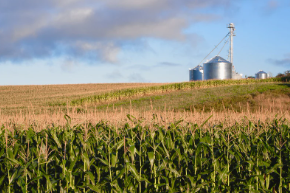

These findings highlight that agricultural change emerges through social, technological, political, and management pathways. Importantly, major changes can be impactful, but not always permanent. Expansion of corn in Nebraska, led to corn production becoming deeply embedded in their regional identity. However, as seen in Georiga, dominant systems can decline or re-emerge over time Suggesting that just because something seems like it was always done does not mean it cannot change or become valued by the communities who engage with it. Understanding how past changes have shaped today’s agricultural system provides important context for future decision-making. It highlights that not all changes lead to the same types of outcomes, some changes reinforce existing systems while others create entirely new direcitons.
In the a future article we will build on these insights to explore the opportunities and challenges shaping future agricultural adaptation across these regions.